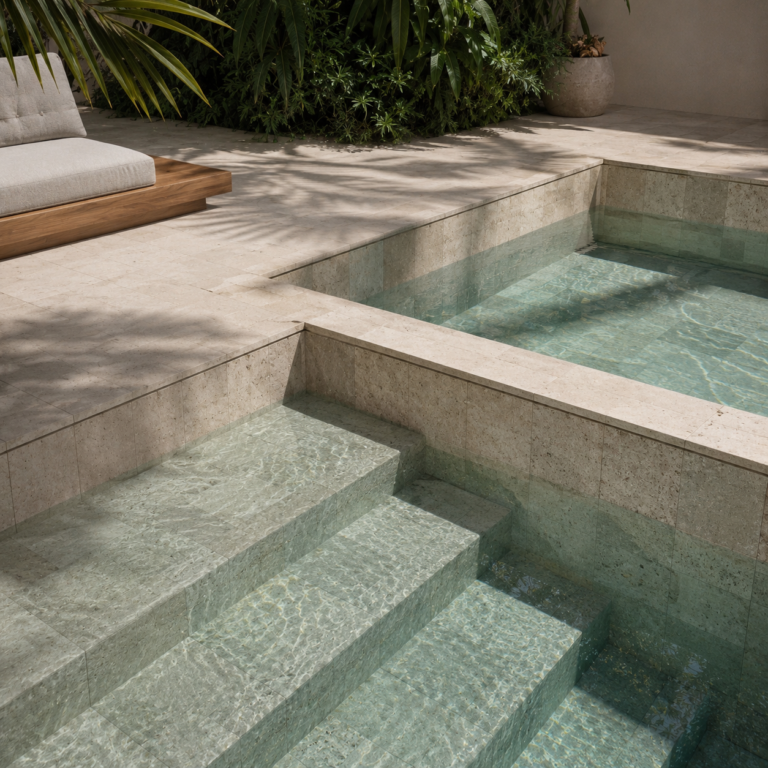
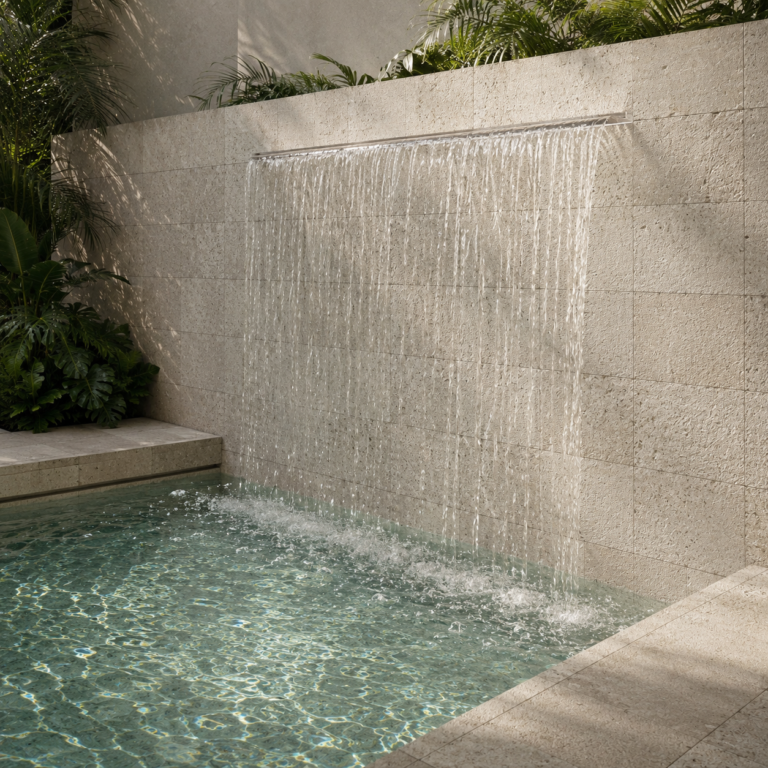
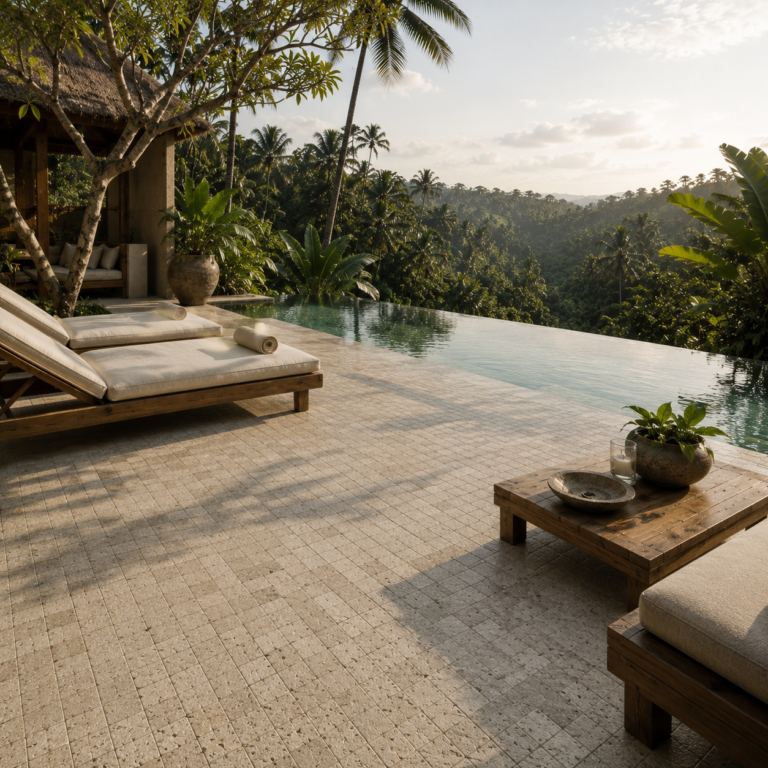
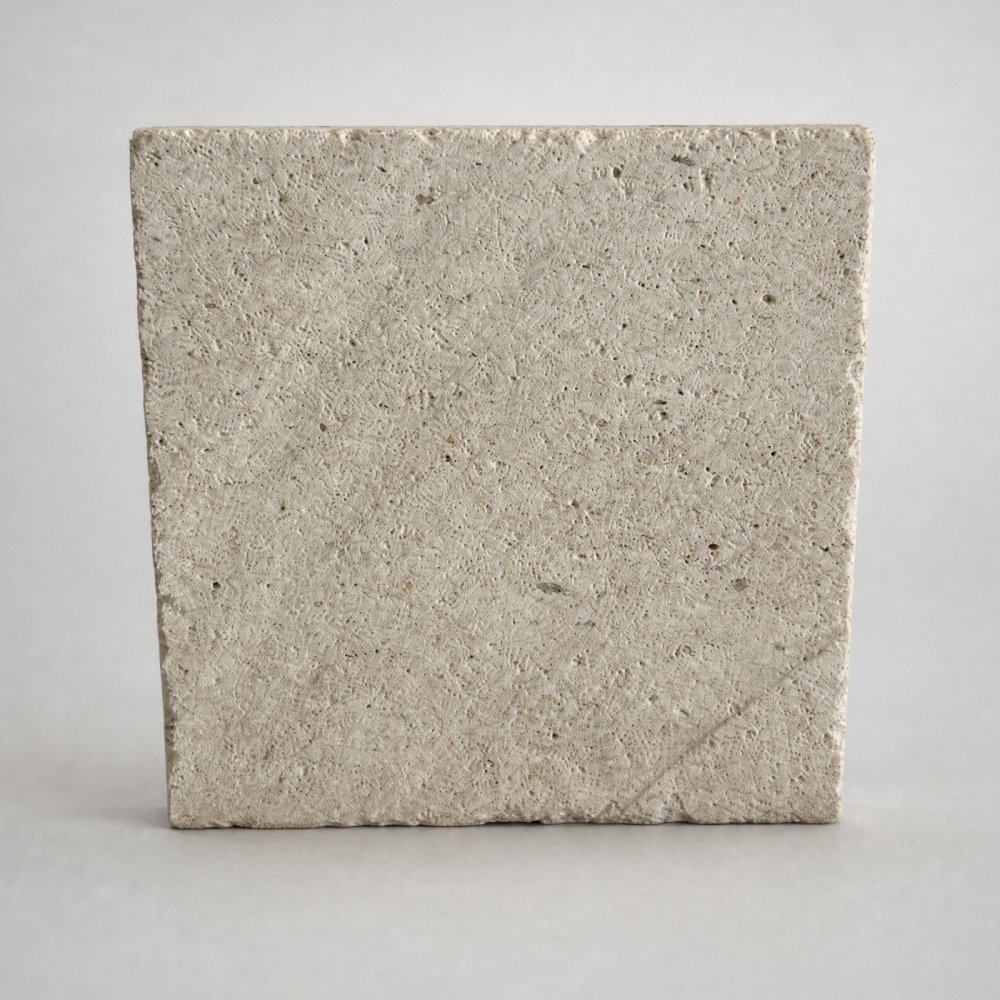
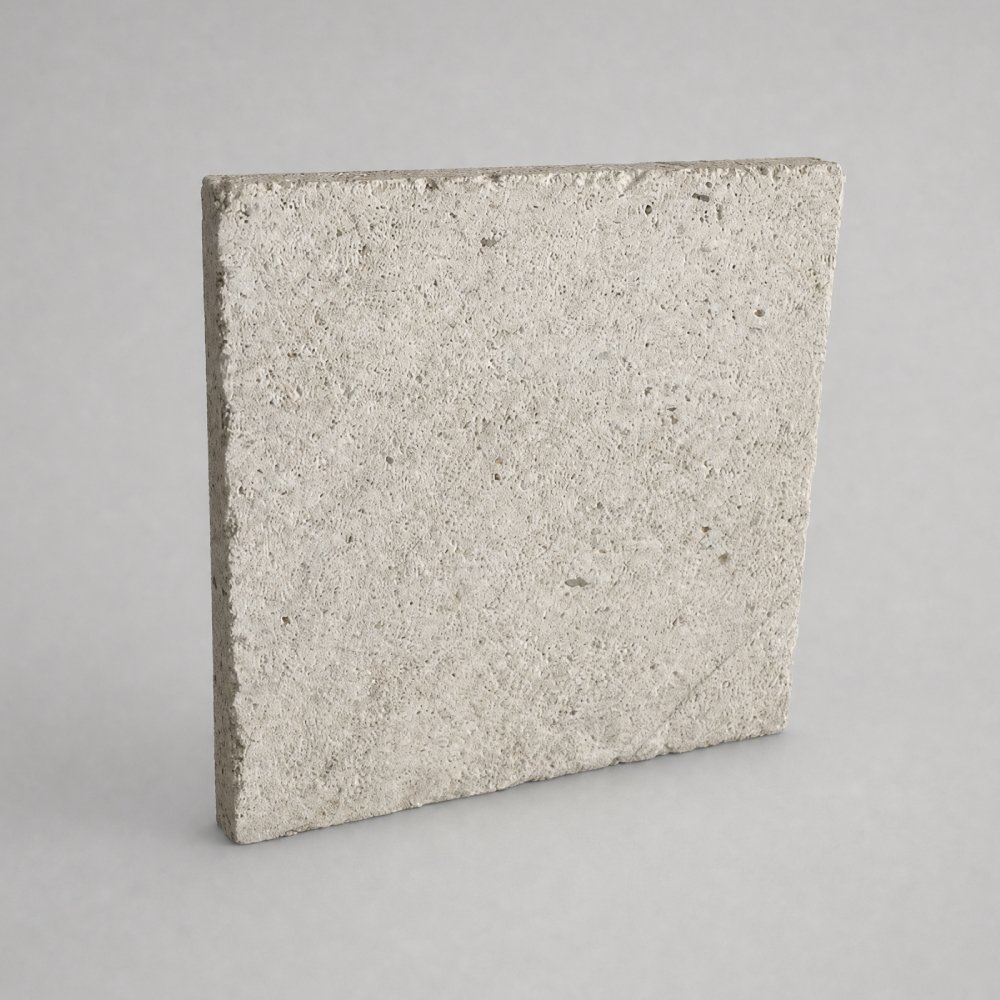
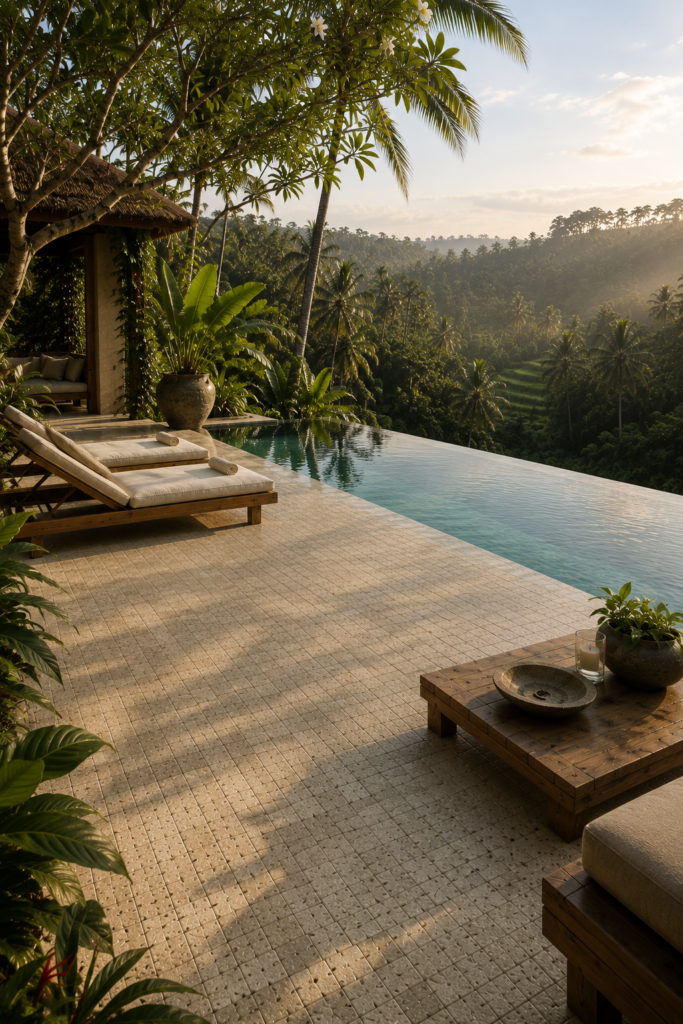
A warm Indonesian limestone, honed to a soft matte — for sun-warmed terraces, calm interiors, and courtyards. From the Sukarta Bare Collection.
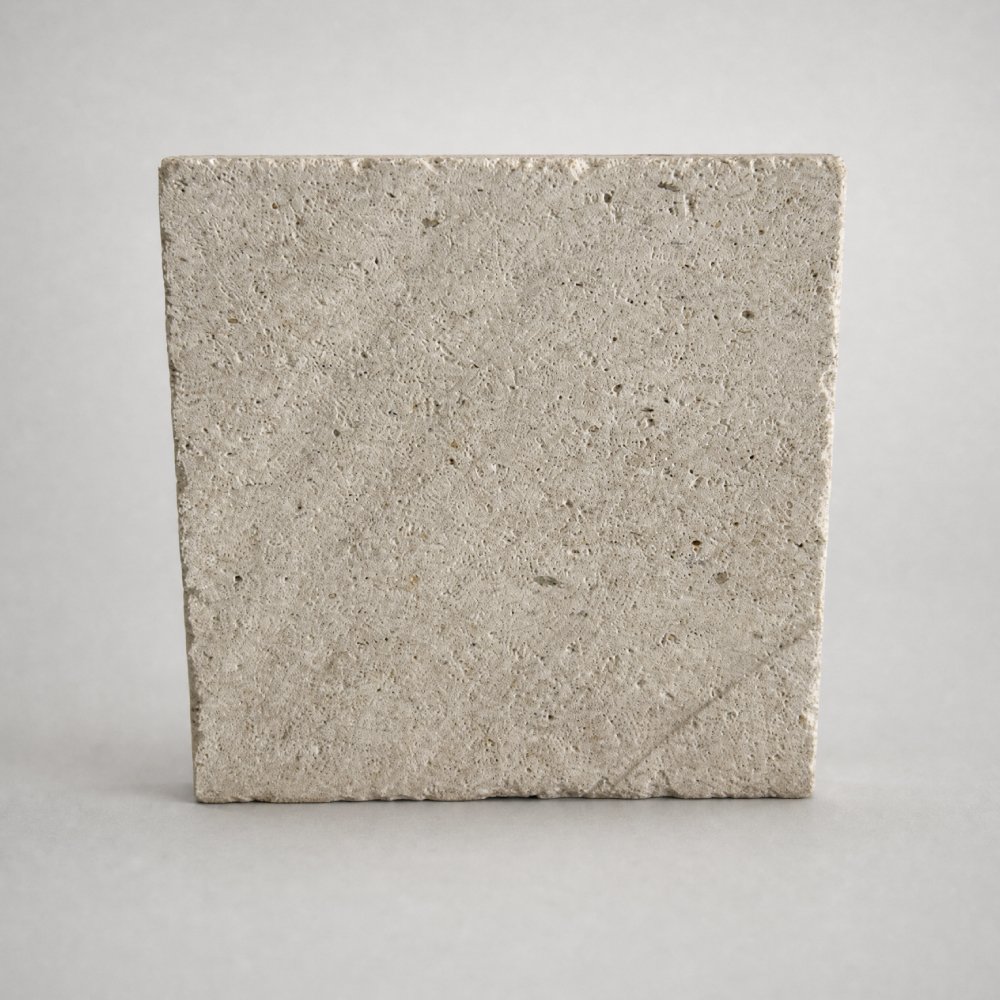
Palm Shade is White Palimanan. A soft, light limestone drawn from a single quarry in West Java, finished by hand to a smooth matte.
The ivory base is warmed by faint cream and shell undertones, and every tile carries a quiet variation that emerges fully once the stone is in place. It is the surface to specify when the room asks for calm.
ON CLOSE LOOK
Read the stone closely
01
Origin
Drawn from a single quarry in West Java, Indonesia. The Palimanan basin has supplied building stone for centuries — same source, same hands. Every tile in the collection comes from the same mineral seam, which is why the variation across an entire floor still reads as one material.
02
Cut & Finish
Hand-cut into calibrated tiles by a small team of craftsmen, then honed to a smooth matte. The cut is sharp; the finish is soft. Both can be felt across the surface.
03
Tone & variation
A warm ivory base, lit by faint cream and shell undertones. Every tile carries a quiet variation — the kind that only emerges once the floor is laid and the room is whole. No two tiles are identical; together they read as one.
04
Care
Routine cleaning with a pH-neutral stone cleaner. Avoid acidic agents — vinegar, citrus, harsh chemical cleaners — which etch limestone. Spills wiped early leave nothing behind.
The honed surface diffuses sunlight instead of reflecting it. Palm Shade reads warm at noon, gold at sunset, and quiet under cloud; without glaring back.
No harsh reflection
Reads as fabric in low light
Photographs warm at every hour
Cool, then warm
A natural limestone, slow to absorb and slow to release heat. The surface stays comfortable underfoot in sun, and under hand on a wall. Honed to a fine matte; close to the skin, never abrasive.
Comfortable barefoot in summer
Smooth matte, never abrasive
Naturally slip-resistant when wet
Patinas, doesn't fade
The tone deepens slightly with use and exposure. Variations that were quiet at install become more present as the stone settles into the room. The patina is the point.